Friday, January 30, 2015

Exposure-Exposure-Exposure

Math ~ Skills for Life 
     
     Children learn a wide range of new math skills every year in school and  teachers help them make connections to real-life situations.  Parents can help children develop solid mathematical understanding by exposing them to math in every day interactions.
 

  Money                             
    What Can Parents Do?
          Give your children a small allowance and let them spend some while saving some as well. Teach them to keep a record of their "income" and "spending" much the way adults do. This will provide important practice with computation skills and will help to develop an understanding of the value of money. 
     Include children when you visit the grocery store or eat at restaurants. Looking at receipts and bills will help them to develop a broader understanding of how money works in every day situations.


Telling Time and 
     Understanding Elapsed Time                       
What Can Parents Do?
      Keep at least one analog clock in your home and teach your children to use it. It is also helpful to use a variety of ways to say time. For example, say, "quarter past ten" instead of "ten-fifteen." Building vocabulary will lead to increased understanding.
     Holding children accountable for their time is important. If you say that they have ten minutes to complete their chore, or a half an hour to finish their homework, set a timer and stick to it. 
     The more we use the language and practice the concepts of time, the more meaningful it will be for our students.
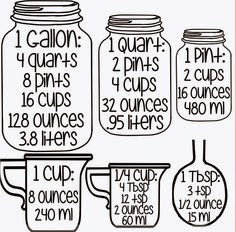


Understanding Measurement 
                              and Conversions
What Can Parents Do?
   Cooking is one of the best ways to help children learn the skills they need to be able to measure and convert units of measure accurately. 
   Building with children, be it bird houses or bookcases, is a fun  way for kids to learn how to use tools and provides meaningful practice of math skills.
    Using cups and gallons, inches and feet can be tricky, and adding the metric system makes it even more so. Exposing children to real life situations that utilize these skills will make for long lasting learning.
Few lessons I cover as a teacher are more dreaded by students and parents alike than teaching how to convert measurement units. Changing between the cups and gallons used in the United States can be tricky enough, let along bringing in the metric system used by other countries. - See more at:
ew lessons I cover as a teacher are more dreaded by students and parents alike than teaching how to convert measurement units. Changing between the cups and gallons used in the United States can be tricky enough, let along bringing in the metric system used by other countries. - See more at:


Great Resources for Families:
http://www.parentfurther.com/resources/enewsletter/saving 
http://artfulparent.com/cooking-kids-35-fun-ideas-recipes 
http://builtbykids.com/
http://www.pbs.org/parents/preschool/tellingtime.html

FUN daily math problems for ALL levels of learning!
http://bedtimemath.org/


Saturday, November 1, 2014

Every Month Should Be Picture Book Month!


 It's November~ Picture Book Month! 


Although November is the time when many schools, libraries, and book lovers celebrate the picture book, we should celebrate joy of the read-aloud experience EVERY day!
Reading aloud is one of the most important things parents and teachers can do with children and it shouldn't stop with our youngest students. Reading aloud is good for all ages as it builds many important skills:
  • Introduces vocabulary
  • Provides a model of fluent, expressive reading
  • And helps children recognize what reading for pleasure is all about!
Author Mem Fox asks us to "Spend at least ten wildly happy minutes every single day reading aloud!" Visit her web page for her Ten Read-Aloud Commandments, fabulous ideas on books and other great information.

Picture books are perfect for reading aloud. They build visual thinking skills, helping to connect words to pictures, and there is a picture book for everything. If you look you will find books to match almost any topic or issue there is!

There are many great Blogs and Websites that can help you in your search for quality picture books. Here are just a few: The Picture Book Review, New York Times Best Sellers, NYT Best Illustrated,  and Children, Books and Reading. Caldecott Medal

Pick up a picture book and enjoy! 


Tuesday, October 14, 2014

Ideas for Reluctant Readers

Reading doesn't comes easily to all kids,  Some students have difficulty making sense of letters and sounds. Others just haven't experienced how fun reading can be.
For all kids, though, reading is a key cornerstone for learning all through  life. Read to and with your kids as often as possible! Try alternative reading genres. Something is sure to resonate with every student.

Comic Books and Graphic Novels: Children who enjoy art and learn best through visual methods will connect to graphic novels and comic books. Although some educators challenge the use of graphic novels, I believe they are a valid and engaging reading option for all students. 

Nonfiction: Most of us have tendencies toward different types of reading. If you prefer music, literature and art, it is possible that you are right brain thinker (global). Left brain thinkers (analytical), on the other hand, prefer nonfiction or technical writing. Help your child explore biography, history and science.

Go Digital: Many of us are trying to curb our use of screen time, however, digital forms of reading might be the path for a reluctant reader. Digital readers and online reading such as Stoyline Online, iStorybooks, and Tumblebooks can improve engagement and motivation for some readers.

Read and Discuss: Nothing is more motivating to a child than one-on-one time with an adult. Choose books together with your children and engage them in discussions. It is relatively easy to find topics for great conversation from picture books to young adult novels.

Remember, if we can help a child find her/his passion, s/he will read.  Any reading material that fosters student enjoyment and builds confidence is the right kind of reading.

Any book that helps a child to form a habit of reading,  to make reading one of his deep and continuing needs, is good for him.      –Maya Angelou


The More That You Learn ...

Did you know March is  National Reading Month? Did you also know March 2 is  Dr. Seuss' birthday? It is the perfect time to remember t...